
 Dental Care
Tooth Enamel Wear: Causes, Symptoms and Treatment
Is Your Tooth Enamel Wearing Away?
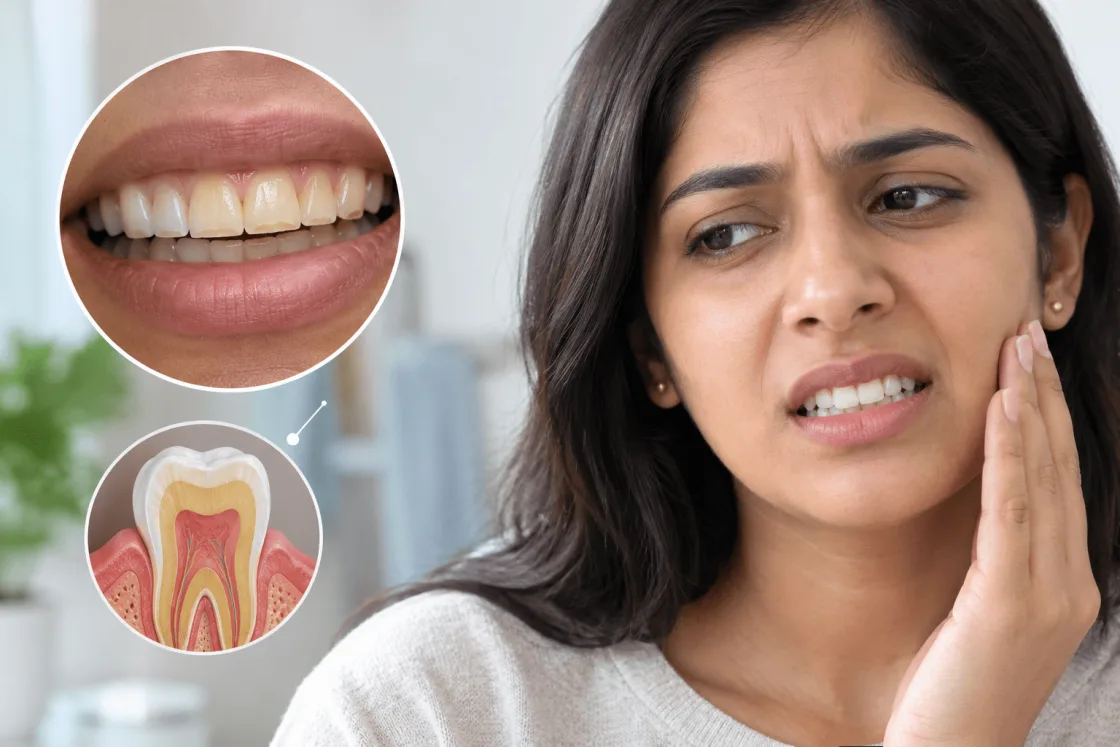
Have you noticed your teeth becoming more yellow, flatter, shorter, or increasingly sensitive to cold and sweet foods?
It could be a sign of Tooth Enamel Wear. Enamel is the hard, protective outer layer of your teeth. It acts like an armor shield around the softer layers underneath. Enamel itself has no nerves, but when it becomes thin or worn away, the underlying dentin may become exposed. Dentin contains tiny channels that communicate with the nerve inside the tooth, which can lead to sensitivity.
The good news is that enamel wear can often be prevented from getting worse when the cause is identified early.
What Causes Tooth Enamel Wear?
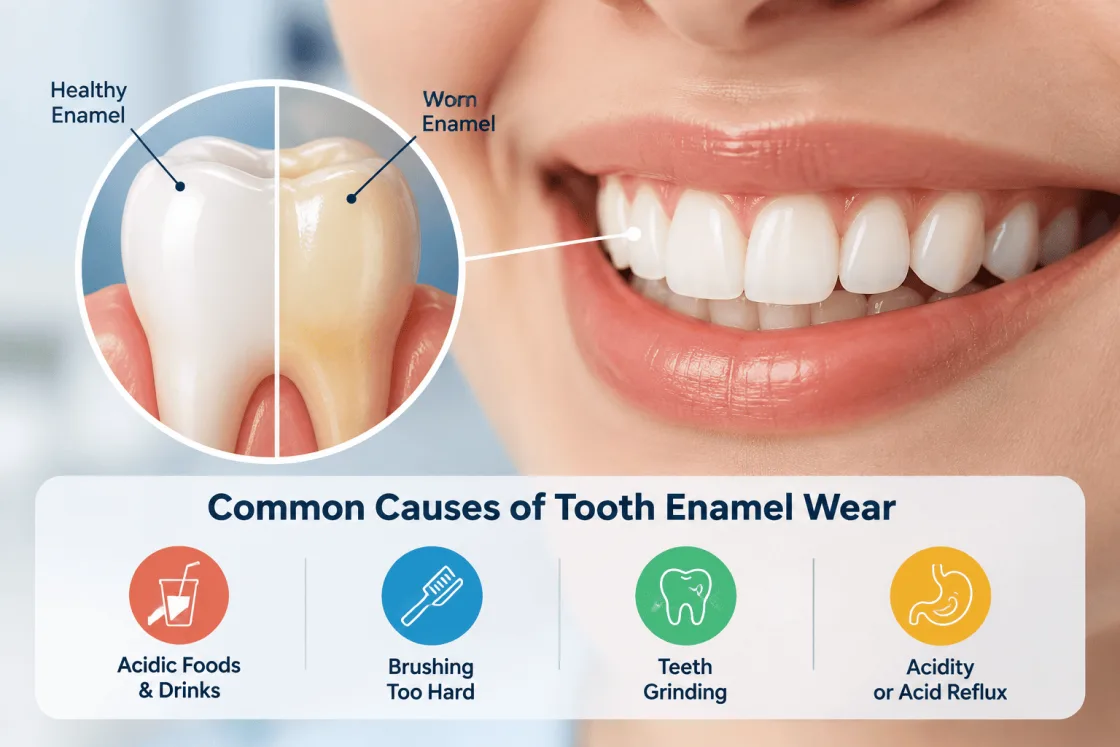
Enamel wear does not always happen for just one reason. Common causes include acid exposure, excessive brushing, teeth grinding, and certain biting habits.
1. Acid Erosion – When Acid Weakens the Enamel
Frequent exposure to acids can soften and gradually dissolve tooth enamel. Common sources include:
- Frequently drinking Coke, Pepsi or other soft drinks.
- Regular consumption of energy drinks.
- Drinking orange juice or other acidic juices frequently.
- Eating a lot of sour foods such as imli, raw mango or lemon.
- Sipping lemon water or acidic drinks throughout the day.
- Stomach acidity or acid reflux reaching the mouth, including during sleep.
- Dry mouth and reduced saliva, which means there is less natural protection against acids.
2. Abrasion – When Teeth Are Worn Away by Rubbing
Enamel can also be damaged by excessive mechanical force.
- Brushing too hard or using a hard-bristled toothbrush.
- Using highly abrasive or whitening toothpaste excessively.
- Biting nails or other hard objects.
- Using your teeth to open packets or bottles.
3. Attrition – When Teeth Wear Against Each Other
Repeated contact between the upper and lower teeth can gradually flatten and shorten them. One common cause is teeth clenching or grinding (bruxism), especially during sleep.
Stress and tension can contribute to grinding, although there can be several other causes as well.
4. Wear Near the Gum Line
Excessive biting forces and other forms of stress can sometimes contribute to defects or notches around the gum line.
However, not every notch is caused by the same mechanism, so a dental examination is important to determine the actual cause.
Why Do Teeth Become Sensitive?
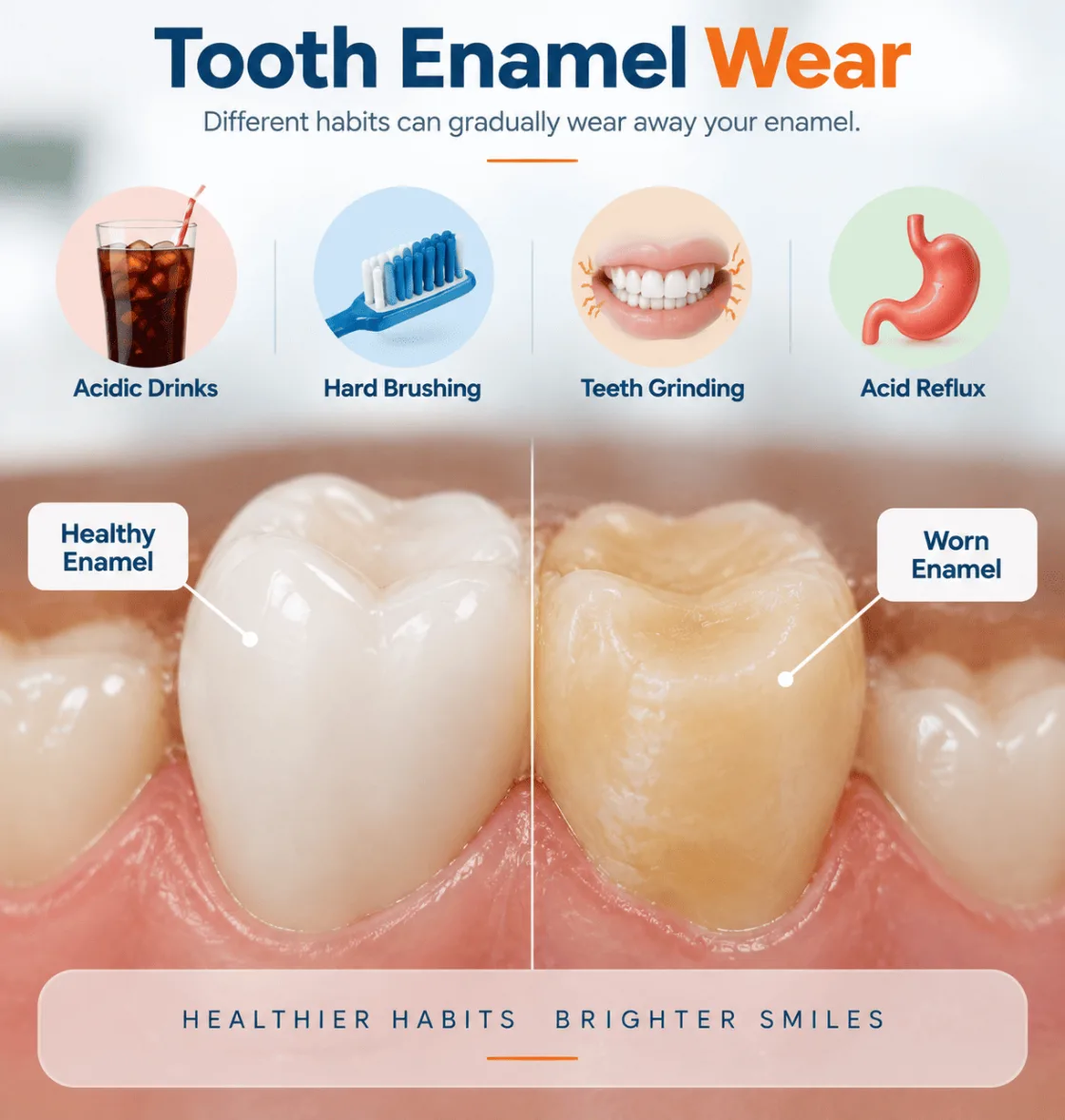
That sudden "jhanjhanahat" when you drink cold water or eat ice cream can happen when the protective enamel becomes thinner and dentin is exposed.
Dentin contains tiny channels that communicate with the nerve of the tooth. When cold water, ice cream, sweets or even cold air reaches these areas, the nerve may receive a sudden stimulus.
This is why enamel wear can cause a sharp, tingling or electric-like feeling in the teeth.
Simple Daily Care for Tooth Enamel
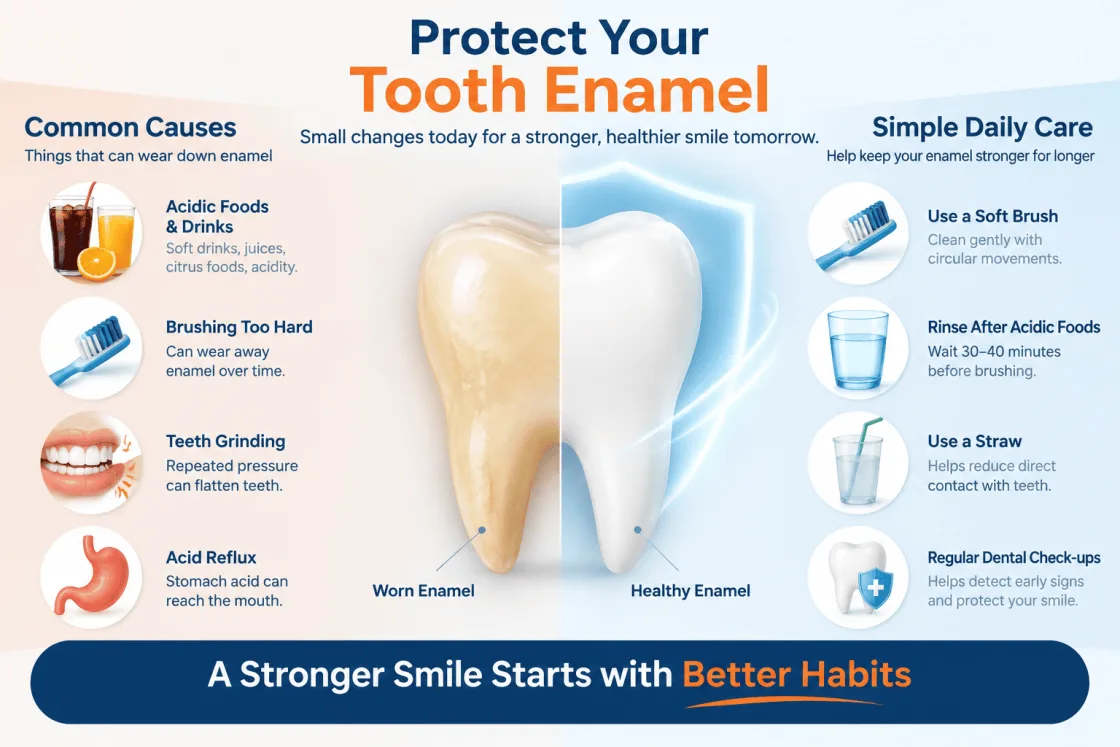
- Brush gently. Use a soft toothbrush and gentle circular movements instead of aggressive left-to-right brushing.
- Do not brush immediately after acidic foods or drinks. Wait around 30–40 minutes and rinse your mouth with plain water first.
- Avoid slowly sipping acidic drinks. Frequent exposure keeps acid in contact with your teeth for longer periods.
- Use a straw where appropriate. This may help reduce direct contact of acidic beverages with the teeth.
- Address teeth grinding. If you grind or clench your teeth at night, speak with your dentist about whether a night guard may be suitable.
- Manage acidity or reflux. Frequent stomach acid reaching the mouth can contribute to enamel erosion.
- Consider sensitivity toothpaste. Sensitivity toothpaste may help manage mild sensitivity when used consistently.
Can Worn Enamel Grow Back?
Unfortunately, tooth enamel cannot naturally regenerate once it is permanently lost. However, early enamel weakening can often be managed by removing the cause and improving oral-care habits.
Depending on how much tooth structure has been lost, a dentist may recommend treatments such as fluoride therapy, bonding or other restorative procedures to protect the tooth and improve its appearance and function.
When Should You Visit a Dentist?
Mild sensitivity may sometimes improve with proper oral care and sensitivity toothpaste. However, persistent or increasing sensitivity should not be ignored.
Consider visiting a dentist if:
- Sensitivity continues for more than 10–15 seconds.
- You can see a visible notch or worn area on the tooth.
- Your teeth are becoming noticeably shorter or flatter.
- Your teeth appear increasingly yellow.
- You have regular jaw pain or morning headaches.
Conclusion
Enamel is your teeth's natural protective shield. Acid, excessive friction and tooth-to-tooth forces can gradually weaken or wear it down. Gentle brushing, reducing frequent acid exposure, addressing grinding and regular dental check-ups can go a long way toward protecting your smile.
If you notice yellowing, flattening, shortening or sensitivity, do not simply assume it is normal. Get it checked early—the sooner the cause is identified, the easier it is to protect the remaining tooth structure.
Frequently Asked Questions
Why do teeth look yellow when enamel wears away?
The layer below enamel is called dentin and has a naturally more yellow appearance. As enamel becomes thinner, more of the dentin colour may become visible.
Can acidic drinks damage tooth enamel?
Frequent exposure to acidic drinks such as soft drinks, energy drinks and citrus-based beverages can contribute to gradual enamel erosion.
Can brushing too hard damage teeth?
Aggressive brushing, particularly with a hard toothbrush, may gradually wear the tooth surface and contribute to notches near the gum line.
Can teeth grinding cause enamel wear?
Yes. Repeated grinding or clenching can cause the biting surfaces of the teeth to become flatter and shorter over time.
Does sensitivity toothpaste help enamel wear?
Sensitivity toothpaste may help reduce discomfort, but persistent sensitivity or visible enamel loss should be evaluated by a dentist.
Book a Dental Consultation
Experiencing tooth sensitivity or visible enamel wear? Book an appointment at our Kanakia, Mira Road clinic.