
 Dental Care
Dry Mouth: Causes, Symptoms and How It Affects Your Teeth
Your mouth naturally produces saliva throughout the day. Saliva helps keep the mouth comfortable, washes away food particles, supports digestion, and protects your teeth from harmful acids.
When your mouth does not produce enough saliva, you may experience dry mouth, also known as xerostomia. It may seem like a minor inconvenience, but persistent dryness can affect your teeth and gums and increase the risk of several oral health problems.
If you frequently wake up with a dry mouth, need to drink water while eating, or feel that your mouth is constantly sticky, it is worth paying attention to these symptoms.
What Causes Dry Mouth?
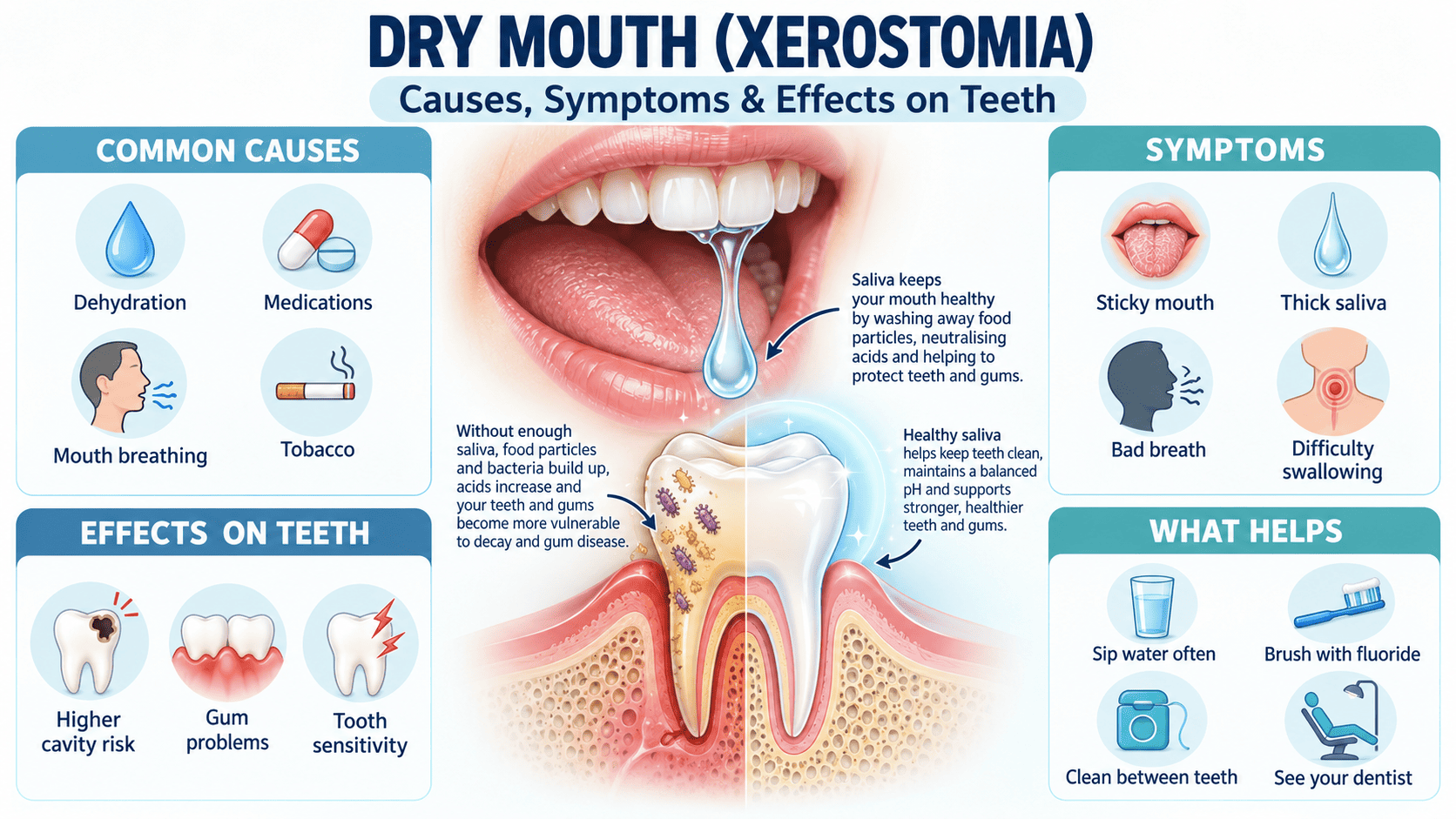
There are several possible reasons for dry mouth. Sometimes it is temporary and caused by dehydration, while persistent dryness may have another underlying cause.
Common factors include:
- Not drinking enough water.
- Certain medications.
- Mouth breathing.
- Smoking or tobacco use.
- Stress.
- Some medical conditions.
If you believe a medication may be causing dry mouth, speak to your doctor rather than stopping the medication yourself.
What Does Dry Mouth Feel Like?

The symptoms can vary from person to person. You may notice a sticky or dry feeling in your mouth, frequent thirst, difficulty swallowing dry foods, cracked lips, thick saliva, bad breath, or a burning sensation.
Some people also notice changes in taste or increased sensitivity in their teeth. If these symptoms continue regularly, they should not simply be ignored.
How Does Dry Mouth Affect Your Teeth?
Saliva plays an important role in protecting teeth. It helps neutralise acids and remove food particles from the mouth. When saliva production is reduced, bacteria can remain active for longer.
This can increase the risk of tooth decay and cavities. Dry mouth can also contribute to bad breath, gum problems, tooth sensitivity, and discomfort while eating. People with persistent dry mouth should therefore pay particular attention to their daily oral hygiene.
Does Dry Mouth Cause Cavities?
Dry mouth can increase the risk of cavities because the mouth loses some of its natural protection against bacteria and acids.
If you frequently have dry mouth and also consume sugary foods or drinks, the risk may be even higher. Regular brushing, cleaning between teeth, and professional dental check-ups become especially important in this situation.
What Can Help With Dry Mouth?
Drinking water regularly is one of the simplest ways to help manage mild dryness. Try to drink water throughout the day rather than waiting until you become very thirsty.
Maintaining good oral hygiene is equally important. Brush twice a day with fluoride toothpaste and clean between your teeth regularly.
- Drink water regularly throughout the day.
- Brush twice a day with fluoride toothpaste.
- Clean between your teeth regularly.
- Reduce excessive caffeine consumption.
- Avoid smoking and tobacco products.
- Maintain regular dental check-ups.
- Seek professional advice if dry mouth persists.
It may also help to reduce excessive caffeine and avoid tobacco products, which can contribute to dryness. If the problem is persistent, a healthcare or dental professional can help identify the possible cause and recommend appropriate measures.
When Should You See a Dentist?
You should seek professional advice if dry mouth continues for an extended period or if you begin experiencing frequent cavities, gum problems, persistent bad breath, or difficulty eating.
A dental examination can determine whether your teeth and gums are being affected and allow problems to be treated before they become more serious.
How DentoXpert Can Help
At DentoXpert Dental Clinic in Thane, dentists can assess your teeth and gums for problems associated with persistent dry mouth. If cavities, plaque buildup, sensitivity, or gum problems are present, suitable treatment can be recommended.
The focus is on treating existing dental problems while helping patients maintain better long-term oral health.
Conclusion
Persistent dry mouth can increase the risk of cavities, gum problems, and bad breath, so it should not be treated as just a temporary inconvenience.
Good hydration, daily oral care, and regular dental check-ups can help protect your teeth. If dry mouth is affecting your oral health, consult DentoXpert Dental Clinic in Thane.
Book a Dental Consultation
Experiencing persistent dry mouth, tooth sensitivity, or frequent cavities? Visit DentoXpert Dental Clinic in Thane for a professional dental examination and guidance on protecting your oral health.