
 Dental Care
Why Does My Mouth Taste Bad? Causes of Bad Taste in Mouth
Have you ever brushed your teeth and still noticed a bad, bitter, sour, or unusual taste in your mouth? An occasional unpleasant taste can happen after eating certain foods, but if the taste keeps returning, it may be connected to your oral health.
A persistent bad taste can sometimes be caused by plaque buildup. In other cases, it may be related to gum disease, tooth decay, a dental infection, or dry mouth. Simply using mouth fresheners or chewing gum may hide the taste temporarily, but understanding the actual cause is more important.
Common Dental Causes of a Bad Taste
Poor oral hygiene is one possible cause. Food particles and bacteria can collect between teeth, around the gums, and on the tongue. If they are not cleaned properly, bacteria can produce unpleasant compounds that affect both your breath and taste.
Another common cause is gum disease. When plaque builds up around the gums, it can cause inflammation and infection. You may also notice bleeding while brushing, swollen gums, tenderness, or gum recession.
Tooth decay can also contribute to an unpleasant taste, particularly when food becomes trapped inside a damaged tooth. As decay progresses, bacteria can multiply inside the affected area.
A tooth infection or dental abscess can cause a particularly unpleasant taste. If pus from an infected area drains into the mouth, you may notice a bitter or foul taste along with tooth pain or gum swelling.
Why Does My Mouth Taste Bitter or Metallic?
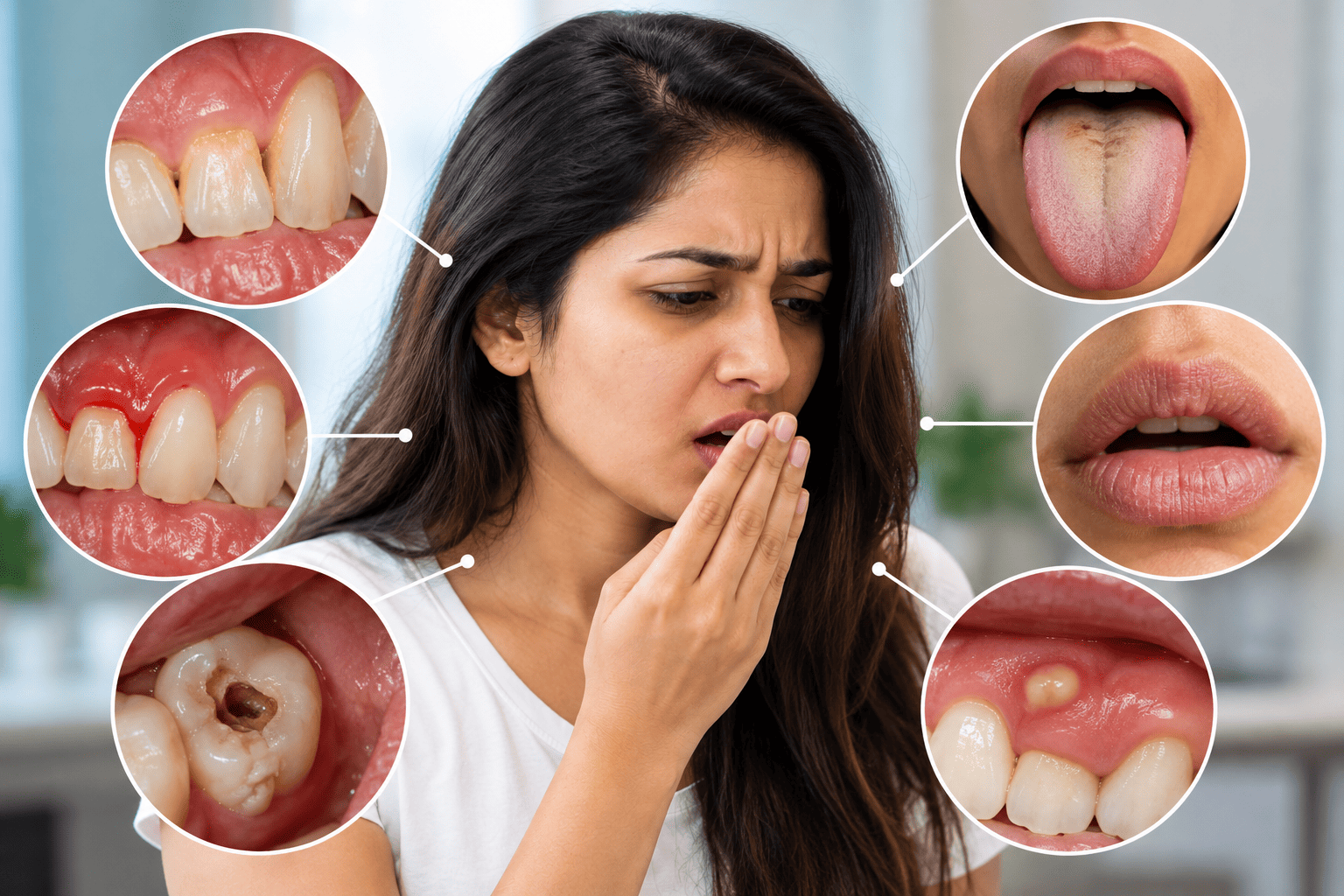
Not everyone describes a bad taste in the same way. Some people experience a bitter taste, while others notice a metallic, sour, or salty taste.
Dental causes may include:
- Gum infection.
- Tooth decay.
- Dental abscess.
- Plaque buildup.
- Dry mouth.
- Poor oral hygiene.
However, certain medicines, dehydration, acid reflux, infections, and other non-dental conditions can also affect your sense of taste. If the problem continues despite good oral hygiene, professional evaluation can help identify the possible cause.
Can Dry Mouth Cause a Bad Taste?
Yes. Dry mouth can contribute to an unpleasant taste because saliva helps keep the mouth clean and controls the buildup of bacteria.
When there is not enough saliva, food particles and bacteria can remain in the mouth for longer. This can contribute to bad breath, changes in taste, tooth decay, and gum problems.
Drinking enough water and maintaining good oral hygiene can help, but persistent dry mouth should also be discussed with a healthcare or dental professional.

What Can You Do About a Bad Taste?
Start with basic oral care. Brush twice a day, clean between your teeth, clean your tongue, and drink enough water.
- Brush your teeth twice a day using fluoride toothpaste.
- Clean between your teeth daily.
- Gently clean your tongue.
- Drink enough water throughout the day.
- Limit frequent sugary snacks and drinks.
- Maintain regular dental check-ups.
- Seek dental advice if the unpleasant taste persists.
Limiting frequent sugary snacks can also help reduce bacterial buildup. Regular dental check-ups are equally important because some causes of bad taste, such as cavities or gum disease, may not be obvious when they first develop.
If the taste continues despite maintaining good oral hygiene, avoid simply covering it with mouthwash or mints. There may be an underlying dental problem that needs treatment.
When Should You Visit a Dentist?
A persistent bad taste deserves attention if it continues for several days or repeatedly returns. It becomes especially important if you also have tooth pain, bleeding gums, swelling, pus, persistent bad breath, or sensitivity.
- Persistent or recurring unpleasant taste.
- Tooth pain or sensitivity.
- Bleeding or swollen gums.
- Pus around the teeth or gums.
- Persistent bad breath.
- Pain while chewing.
- Swelling around the affected tooth.
Finding the cause early can help prevent a small dental issue from becoming more serious. If you have significant facial swelling or fever with a suspected dental infection, seek urgent assessment. Difficulty breathing or swallowing requires immediate emergency medical care.
How DentoXpert Can Help
At DentoXpert Dental Clinic in Thane, dentists can examine your teeth and gums to determine whether the unpleasant taste is related to decay, infection, gum disease, or oral hygiene problems.
Depending on the cause, treatment may include professional scaling, gum treatment, dental fillings, or Root Canal Treatment for an infected tooth.
A dental examination can help identify oral health problems and determine whether further medical evaluation is needed for non-dental causes.
Conclusion
A persistent bad taste in the mouth can sometimes indicate an underlying dental problem, especially when it occurs with tooth pain, swelling, bleeding gums, or bad breath.
Good oral hygiene is important, but identifying and treating the actual cause is equally important. For professional dental evaluation in Thane, consult DentoXpert Dental Clinic.
Book a Dental Consultation
Experiencing a persistent bad, bitter, sour or unusual taste in your mouth? Visit DentoXpert Dental Clinic in Thane for a professional dental examination and appropriate treatment.